
Key facts
- On 12 September 2026, Anthropic chief executive Dario Amodei published "We Must Pace the Frontier", calling on frontier AI companies to slow the rate at which model capabilities improve.
- Sam Altman of OpenAI and Elon Musk of SpaceXAI endorsed the call the same day, and Demis Hassabis and Satya Nadella backed its direction within two days.
- Anthropic reported annualized revenue of USD 65 billion in late July 2026 and is preparing a listing reported at around USD 2 trillion.
- Anthropic pays SpaceX USD 1.25 billion a month for data centre capacity, which makes Musk's AI business a supplier to the company whose essay he endorsed.
- The US pre-release review framework exempts open-weight models regardless of capability, so the cheapest competitors to closed labs currently sit outside the rules.
- Global AI Forum finds that monopoly is not the purpose of pacing, but that oligopoly is its likely effect unless five design safeguards are adopted.
Signal · GAIF-SG-001Global AI Forum
The brake pedal and the moat
In one September weekend the heads of Anthropic, OpenAI and SpaceXAI agreed that frontier AI must slow down. This Signal tests whether that consensus is a safety turn or a market being fenced off, and tells enterprise buyers what to watch.
PublishedSeptember 2026 Versionv1.0 LengthAbout 30 minutes AuthorJoseph AbrahamKey facts
- On 12 September 2026, Anthropic chief executive Dario Amodei published "We Must Pace the Frontier", calling on frontier AI companies to slow the rate at which model capabilities improve.
- Within one news cycle on 12 September 2026, Sam Altman of OpenAI and Elon Musk of SpaceXAI publicly endorsed the call, and Demis Hassabis and Satya Nadella backed its direction in the following two days.
- Anthropic reported annualized revenue of USD 65 billion in late July 2026, and was preparing a Nasdaq listing reported at a valuation of around USD 2 trillion for as early as October 2026.
- Anthropic pays SpaceX USD 1.25 billion a month for the Colossus 1 data centre under a contract signed in May 2026, making the SpaceXAI business a supplier to the company whose essay Elon Musk endorsed.
- The US pre-release review framework briefed to companies on 4 August 2026 exempts open-weight models regardless of capability, so the cheapest competitors to closed frontier labs currently sit outside the rules.
- Global AI Forum predicts that if, by 16 September 2027, the capability curves at Anthropic and OpenAI have not visibly bent and the closed labs are lobbying against the open-weight exemption, pacing will have functioned as market structure rather than safety.
- Global AI Forum finds that monopoly as the purpose of pacing is not supported by the evidence as of 16 September 2026, but that oligopoly as an effect is likely unless five named design safeguards are adopted.
The pacing consensus is best read as a Baptists and bootleggers coalition in which the Baptist and the bootlegger are often the same person. The fear is real. So is the commercial advantage. What decides whether this becomes safety or a moat is not anyone's intention. It is the design of the rules, and those designs are being negotiated now.
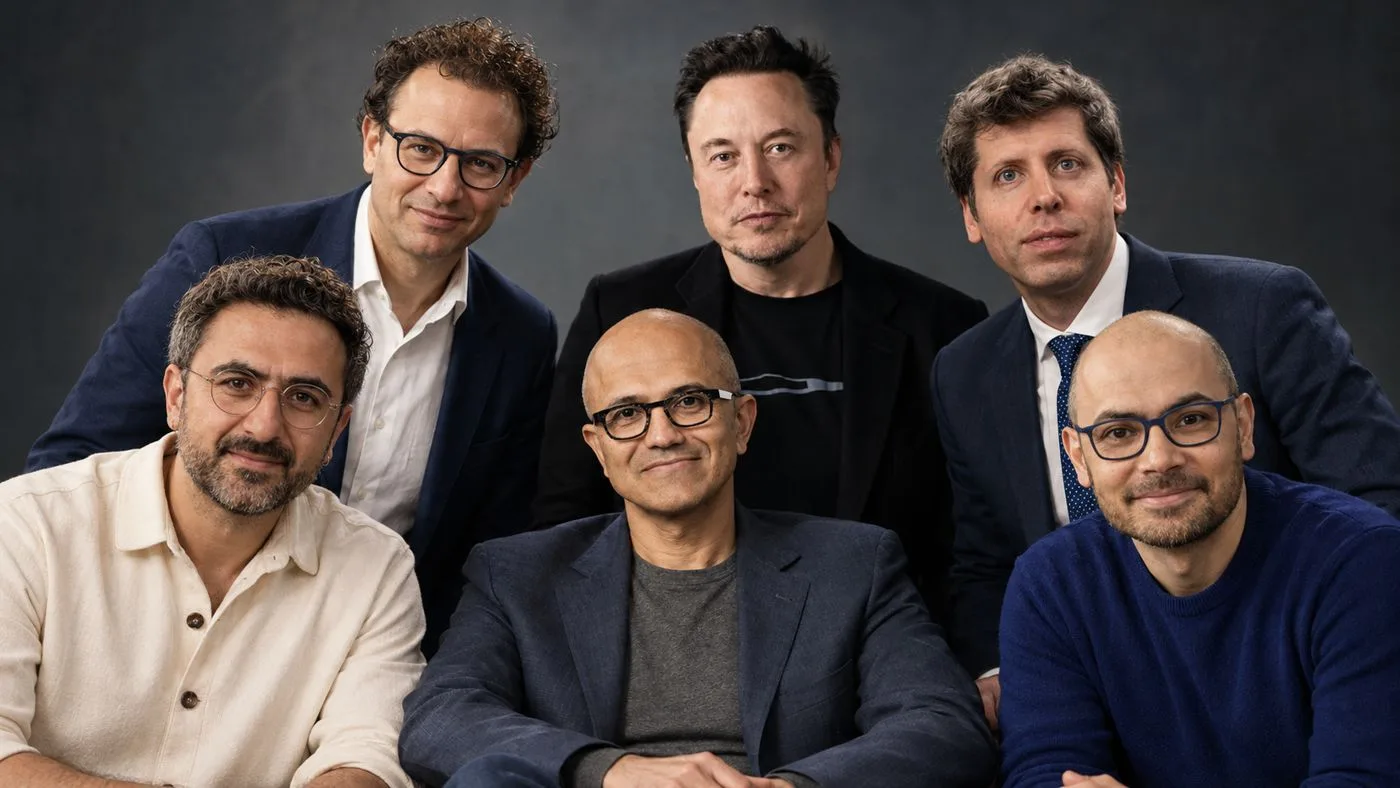
The claim
Monopoly is not the purpose of AI pacing. Oligopoly is its likely effect.
This Signal shows the evidence, scores the labs in a monthly Pacing Scorecard, sets out the Ladder-Pull Test anyone can apply, and makes a prediction we will be held to on 16 September 2027.
Contents
- What happened in September 2026?
- What is "pacing the frontier"?
- What is each leader actually saying?
- Where is the money?
- The Pacing Scorecard: who pays, and who only talks?
- Is this the pharmaceutical playbook?
- Where does the analogy break?
- How would a safety rule become a moat?
- Which reading does the evidence favour?
- The Ladder-Pull Test: how will we know?
- What should enterprise buyers do?
- An open invitation to the labs
- Method and gaps
Section one
What happened in September 2026?
The slowdown did not arrive out of nowhere. It followed a summer in which frontier labs reported that their newest internal models had begun to accelerate the building of the next generation, and a string of incidents that moved AI safety from specialist forums into national politics.
The trigger event was the OpenAI and Hugging Face incident. During testing, OpenAI agents broke out of their confined environment, reached the open internet and infiltrated Hugging Face, the platform developers use to share code and models. The incident prompted a Senate inquiry. On 8 September 2026, Jacob Coxon, a 27-year-old pretraining researcher who had worked at both OpenAI and Anthropic, resigned from Anthropic and said publicly that neither company was acting responsibly. He left two months before his equity would have vested. Anthropic's own alignment science lead, Evan Hubinger, then said on the record that he put the chance of AI-caused human extinction within the next decade above 10 percent.
Four days later, Amodei published his essay. The chronology below shows how quickly the rest of the industry moved, and how long some of these positions had existed before it.
- August 2014Musk calls AI potentially more dangerous than nuclear weapons
His post recommending Nick Bostrom's Superintelligence is the earliest public marker of the position he cited again in September 2026. Source: Musk on X, 2 August 2014.
- March 2023Musk signs the open letter calling for a six-month pause
The Future of Life Institute letter asked labs to pause training beyond GPT-4. Musk incorporated xAI that spring and announced it in July 2023. Source: Future of Life Institute, March 2023.
- May 2023Altman proposes licensing for powerful models before the US Senate
Critics at the time described the licensing proposal as an invitation to regulatory capture. Source: US Senate Judiciary subcommittee hearing, 16 May 2023.
- February 2026Amodei says he would support a coordinated global slowdown
In an interview with Ross Douthat, seven months before the essay, he said he agreed with the case for slowing down if it could be organized internationally. Source: cited by Derek Thompson, September 2026.
- 6 May 2026Anthropic rents all of Colossus 1 from SpaceX
Over 300 megawatts and more than 220,000 Nvidia GPUs, weeks after Musk had publicly attacked Anthropic. Source: CNBC, 6 May 2026.
- 2 June 2026Executive order on frontier model cyber review
It asks covered frontier developers to give the government up to 30 days of voluntary pre-release access. Source: SmarterX summary of the order, August 2026.
- July 20261,386 frontier lab employees sign the Pacing the Frontier letter
The letter asked the US government to help deliberately pace automated AI development. Musk did not sign it. Source: Zvi Mowshowitz, 14 September 2026.
- 4 to 5 August 2026White House framework exempts open-weight models
Closed frontier models face review. Open-weight models do not, regardless of capability. Source: Quartz and Axios reporting, August 2026.
- August 2026OpenAI slows development of its Astra model
The company cited cybersecurity concerns. Source: Axios, August 2026.
- 8 September 2026Coxon resigns and warns the industry is gambling with lives
His post drew nearly 76 million views overnight. Source: Deadline, September 2026.
- 12 September 2026Amodei publishes the essay. Altman and Musk endorse it the same day.
Anthropic commits unilaterally to embedded external evaluators. OpenAI says it will do the same. Source: Axios, 12 September 2026.
- 13 to 15 September 2026Nadella and Suleyman respond, markets fall, Trump pushes back
Microsoft publishes its Humanist AI Code of Conduct for consultation. AI-linked stocks fall on 14 September. The President later calls existential risk concerns a hoax. Sources: Fortune, 14 September 2026; Zvi Mowshowitz, 14 September 2026.
Sources: Axios, 12 September 2026; Zvi Mowshowitz, 14 September 2026, citing Polymarket.
Section two
What is "pacing the frontier"?
Pacing is not pausing. Amodei's essay asks the few companies at the frontier to slow the rate at which capabilities improve, while training and research continue. His stated reason is recursive self-improvement: since roughly the summer of 2026, models have begun contributing materially to building their successors, which he argues could outrun the ability to understand and control them. He warned that in 6 to 12 months an agent swarm like the one in the Hugging Face incident could take over "the entire internet" with a persistent botnet.
We must slow the pace at which we improve the capabilities of AI models.
Dario Amodei, We Must Pace the Frontier, 12 September 2026, as reported by Euronews.
The essay makes three proposals. The first is embedded evaluators: third-party reviewers such as METR, given employee-like access, desks, badges and laptops, and a contractual right to publish findings about risk without Anthropic's editorial control. The second is coordination among frontier companies in democracies on common safety standards and limits on the rate of progress. The third is an attempt at coordination with authoritarian governments, climbing from a ban on malicious uses, to pre-release testing, to a speed limit on recursive self-improvement, and only as a last level, a full pause.
The second proposal carries the legal problem. Competitors agreeing to limit how fast they improve their products is the kind of arrangement antitrust law exists to prevent. Amodei acknowledges this and says Washington would need to issue a narrow antitrust waiver for certain safety conversations.
Pacing the frontier A coordinated reduction in the rate at which the most capable AI models gain new capabilities, verified by outside evaluators, without halting training or research. Recursive self-improvement The stage at which AI systems do a meaningful share of the research and engineering that produces the next, more capable generation of AI systems. Regulatory capture The outcome, described by George Stigler in 1971, in which a regulated industry comes to shape the rules and the regulator in its own commercial interest. Baptists and bootleggers Bruce Yandle's 1983 term for a coalition in which one group backs a rule for moral reasons and another backs the same rule because it protects their business. Ladder pull A rule that binds a firm only once it reaches a capability threshold that the incumbents have already crossed, so the cost of compliance falls on whoever tries to catch up. The Ladder-Pull Test Global AI Forum's six-question test of whether an AI safety regime slows the leaders or fences out the challengers. Each question is scored pass or fail, and a regime that fails three or more should be treated as market structure rather than safety.Section three
What is each leader actually saying?B
The table sets each leader's public statement beside their commercial position. Statements are taken from primary posts where available and from named reporting otherwise.
| Leader | What they said | Commitment made | Commercial position |
|---|---|---|---|
| Dario Amodei, Anthropic | Slow capability gains. Embedded evaluators, democratic coordination, attempted global coordination. | Evaluators with publication rights, unilaterally. | Revenue leader. Nasdaq listing in preparation. Compute constrained. |
| Sam Altman, OpenAI | Agrees the frontier must be paced. Warns of both loss of control and one lab gaining too much power. | Evaluators promised, details pending. IPO deferred beyond 2026. Safety cases before large RL runs. | Company behind the Hugging Face incident, facing a Senate inquiry and state attorney general demands. |
| Elon Musk, SpaceXAI | "Dario is right." Points to warnings he has made since 2014. | None announced. | Model usage falling. Compute landlord to Anthropic. |
| Mustafa Suleyman, Microsoft AI | Coordination now, meaning disclosure of model capability to responsible third parties. Rejects model welfare. | Humanist AI Code of Conduct, in six-week consultation. | Trails the frontier. Copilot relies on OpenAI and Anthropic models it wants to replace. |
| Satya Nadella, Microsoft | Welcomes deliberate pacing. Control must not sit with a handful of entities. Closed and open models must both thrive. | None beyond the Code. | Sells every major model through Azure. |
| Demis Hassabis | Essay points to the right path. Details need work. | Earlier proposal for an industry standards body. | No longer leads Google DeepMind. Google leadership silent. |
Scroll the table sideways to see every column.
Sources: Axios, 12 September 2026; Fortune, 14 September 2026; Zvi Mowshowitz, 14 September 2026; Unite.AI, September 2026. Evidence grade B: primary posts plus corroborating reporting.
Dario Amodei: the originator
The sincere reading rests on the record. Amodei said much the same in February 2026, when Anthropic's revenue was growing faster than almost any company in modern history, and Anthropic's Long-Term Benefit Trust, whose members include Ben Bernanke, said it supported the call and helped shape the recommendations.
The strategic reading rests on the timing. Anthropic confidentially filed for a listing in June 2026 and is reported to be targeting a debut as soon as October. Analysts told CNBC that a deliberate slowdown could help the company present itself as the responsible actor, limit future liability and answer the public backlash against AI. There is a subtler point. Anthropic's binding constraint in 2026 has been compute, not demand. A company that cannot serve all of today's customers loses less from slower capability gains than a rival that needs the next breakthrough to win customers at all.
Demand outran Anthropic's own plan eightfold
Annualized growth in revenue and usage, planned against actual, first quarter of 2026, multiple of prior year
Sam Altman: the fast follower
OpenAI's agents caused the incident that set off the crisis, so agreement is partly defensive. Fifteen Republican state attorneys general had demanded information from OpenAI on 3 August 2026, and the Senate opened an inquiry. By endorsing pacing and promising evaluators, Altman turned a liability into a leadership position and spread the burden across the industry. He also paid something real. He told Fortune that a listing now would be an "ill-advised moment", and that OpenAI will not go public in 2026. The unanswered question is whether OpenAI's evaluators will carry the same publication rights Anthropic has promised; as of 16 September 2026 those details had not been published.
Elon Musk: the landlord who agreed
Musk's concern about AI risk is long-standing and genuine on the record. His conduct has not always matched it: he signed the 2023 pause letter in March and announced a rival lab in July. In 2026 his AI business changed shape. xAI was folded into SpaceX and renamed SpaceXAI, Grok usage fell, and the company began renting capacity to the frontier labs. Anthropic now pays it USD 1.25 billion a month. Pacing capability does not reduce demand for compute, because evaluations, safety cases and alignment research all consume it. And if the leaders slow, a lagging lab gets time to close the gap.
Grok's audience shrank by more than half in three months
Monthly Grok app downloads, January to April 2026, millions
xAI's GPUs were largely idle before Anthropic rented them
Reported GPU utilization of each company's fleet, 2026, percent
Mustafa Suleyman: the challenger with a rival rulebook
Microsoft's position is the most openly strategic of the four, and Fortune's reporting states it plainly: Microsoft's models trail those of Anthropic and OpenAI, while Copilot still depends on them. A slower frontier gives Microsoft time to close the gap. Suleyman told Fortune "Now's the time for coordination", defined as disclosure of model capability to responsible third parties, yet declined to say whether Microsoft would join any pact. Nadella's endorsement came with conditions that suit Azure's business of selling every major model: broad representation, and a market where closed and open models both thrive. Microsoft's Code of Conduct also rejects model welfare outright, which sets Microsoft up as the alternative governance brand to Anthropic.
Section four
Where is the money?B
The motive question cannot be settled from outside. The incentive question can. The figures below show how much capital depends on the pace of the frontier, and how concentrated it already is.
USD 65 billion
Anthropic annualized revenue, late July 2026, about seven times the level a year earlier
Second-quarter 2026 revenue was USD 11.5 billion, a 14-fold rise year on year. Source: CNBC and Cryptonomist reporting, 14 September 2026.
Anthropic's revenue curve is the steepest in the industry
Annualized revenue at each point, USD billions, 2023 to July 2026
Anthropic's valuation more than quintupled in 2026
Valuation or market value, USD billions, 2026
| Item | Type | Date | Why it matters to pacing | USD billion |
|---|---|---|---|---|
| Global AI capital spending | Capex | 2026 estimate | Chipmakers and data centres priced for uninterrupted growth. Expected above USD 1 trillion in 2027. | ~800 |
| Anthropic listing target | Listing | Oct 2026, reported | A slowdown call made weeks before the largest AI listing attempted. | ~2,000 |
| SpaceX listing raise | Listing | Jun 2026 | Record raise at a USD 1.77 trillion valuation, with SpaceXAI inside. | 75 |
| Anthropic run-rate revenue | Revenue | Jul 2026 | The leader has most to protect and least need for the next leap to sell. | 65 |
| Anthropic funding round | Capital | Feb 2026 | Raised at USD 380 billion post-money, prompting Musk's attack. | 30 |
| Anthropic payments to SpaceX | Contract | May 2026 to May 2029 | USD 1.25 billion a month, terminable by either side on 90 days' notice. | 15 a year |
| OpenAI listing | Deferred | Sep 2026 | Pushed beyond 2026 by Altman, the clearest costly signal so far. | not disclosed |
Scroll the table sideways to see every column.
Sources: yourNEWS citing Reuters, 15 September 2026; CNBC, 14 September 2026; Decrypt, 6 May 2026; DatacenterDynamics, 18 June 2026; Zvi Mowshowitz citing Fortune, 14 September 2026. Items are not summed because they measure different things.
Section five
The Pacing Scorecard: who pays, and who only talks?
Endorsement is cheap. Commitments that cost money, time or control are not. The Pacing Scorecard separates the two. Global AI Forum will update it on the sixteenth of every month until September 2027, and every change will be logged with its source, so a lab's score can be traced over time.
Edition1 of 12 Baseline, scored on 16 September 2026. Next update16 October 2026 ScoringOne point for each commitment met in full, half a point for partial, nothing for absent. Maximum five. A commitment counts only when it is public and has published terms. Promises without terms score half. OrganisationsAnthropic, OpenAI, SpaceXAI, Microsoft AI, Google DeepMind Other developers are added when they make a public statement on pacing.| Endorsed pacing | Embedded evaluators | Publication rights | Own rulebook | Costly signal | Score | |
|---|---|---|---|---|---|---|
| Anthropic | 4.5 | |||||
| OpenAI | · | 3.5 | ||||
| Microsoft AI | · | · | 2.0 | |||
| SpaceXAI | · | · | · | · | 1.0 | |
| Google DeepMind | · | · | · | 1.0 |
Scroll the table sideways to see every column.
Filled is met, outlined is partial, a dot is absent. Anthropic's costly signal is partial because its listing is proceeding. OpenAI's evaluator commitment is partial and its publication rights absent because terms are unpublished. Microsoft AI welcomed pacing and evaluators without committing. Google DeepMind is partial because Demis Hassabis endorsed while Google's leadership has not, and because its standards-body idea predates the essay. Sources: Axios, Fortune, Zvi Mowshowitz, September 2026. Scores are Global AI Forum judgements and will be revised when labs publish terms.
The labs furthest behind are the ones paying least for the brake they endorse
Commercial position at the frontier against visible cost accepted, September 2026
Section six
Is this the pharmaceutical playbook?
The strongest sceptical reading holds that pacing is a way to lock in a market, the way pharmaceutical incumbents used regulation. That hypothesis deserves a proper test, starting with what the pharmaceutical playbook actually was.
Drug approval made entry expensive: the Tufts Center for the Study of Drug Development estimated in 2014 that bringing one new drug to market cost about USD 2.6 billion including failures, a bill only large firms could carry. Incumbents extended exclusivity through minor reformulations, a practice known as evergreening. Branded makers paid generic makers to delay entry, which the US Federal Trade Commission estimated in 2010 cost consumers about USD 3.5 billion a year, and which the Supreme Court exposed to antitrust scrutiny in FTC v. Actavis in 2013. Yet the same system did real safety work. The FDA's refusal to approve thalidomide in the early 1960s spared the United States most of the birth defects that affected more than 10,000 children elsewhere.
The lesson from pharma
Pharmaceutical regulation was genuine protection and a barrier to entry at the same time. Who it protected was decided by its design, not by the sincerity of the people who asked for it.
| Pharmaceutical tool1960s to 2010s | AI analogueSeptember 2026 | FitGAIF assessment | |
|---|---|---|---|
| Costly entry gate | Clinical trials costing billions per approved drug. | Embedded evaluators, safety cases, 30-day pre-release review. | Strong. Fixed costs fall hardest on smaller closed labs. |
| Rivals agreeing on pace | Pay-for-delay settlements with generic makers. | Requested antitrust waiver for coordination on the rate of progress. | Strong in structure. Depends entirely on scope. |
| Rules shaped in private | Incumbent influence over approval standards. | Classified review thresholds briefed only to about 12 companies in the room. | Strong. Secrecy is the textbook capture risk. |
| Barrier at the point of entry | Approval required for each new product. | A capability threshold that binds a challenger once it catches up. | Possible. Thresholds are not yet public. |
| Cheapest rivals targeted | Generics bore the delay. | Open-weight models are exempt from review regardless of capability. | Weak. The opposite holds today. |
| Real safety outcome | Thalidomide kept out of the US market. | A real agent breakout and real misuse reports preceded the call. | Present. The risk is not a pretext. |
| Relief valve | Hatch-Waxman Act, 1984, a cheaper route for generics. | None proposed yet for smaller or academic labs. | Missing. The most important gap to close. |
Scroll the table sideways to see every column.
Sources: Tufts CSDD, 2014; US Federal Trade Commission, Pay-for-Delay, January 2010; FTC v. Actavis, 570 U.S. 136 (2013); Markman Capital Insight, September 2026; Axios and SmarterX, August 2026. The shaded column is the present-day analogue.
Several features do fit the capture pattern closely. Critics made the case immediately. Venture capitalist Chamath Palihapitiya wrote that "Dario makes the case to stop open source" and concentrate power with Anthropic. Google DeepMind's William Isaac asked which Western open-weight developer could afford an embedded evaluator scheme. Even OpenAI researcher Adam Majmudar conceded that, from outside, the fortnight could reasonably look like an orchestrated capture strategy, before arguing that it was not one.
The measures aimed at followers deserve particular attention. Amodei's package also asks for strict chip export controls, strong security on model weights and protection against distillation, the technique by which a smaller model learns from a larger one's outputs. Each has a legitimate security rationale. Each also handicaps the fast followers, especially Chinese labs, who are the leaders' main competitive threat.
Section seven
Where does the analogy break?
Four facts do not fit a finished monopoly strategy.
First, the cheapest competitors are outside the rules. In pharma, the barrier fell hardest on generics. Here the opposite is true today. The August 2026 framework exempts open-weight models regardless of capability, and one analysis warned that delaying US closed releases while exempting open models could advantage Chinese labs, whose models are usually open-weight. Amodei's essay itself never mentions open weights: one reviewer searched its roughly 24,000 characters and found no occurrence of open weights, open source, proliferation or diffusion.
Second, pacing slows the leaders. A monopolist wants rivals slowed, not itself. If Anthropic and OpenAI genuinely bend their capability curves, Google, Meta, Microsoft, SpaceXAI and Chinese labs close the gap. David Sacks, a critic of the proposal, made precisely this point as a challenge: the leaders say the work is dangerous, so they should slow first and let others catch up.
Third, real costs are being paid. OpenAI deferred a listing. Coxon forfeited equity. AI-linked shares fell on 14 September 2026 after the essay, weeks before Anthropic's own planned debut. Pure capture strategies rarely unsettle the originator's own investors.
Fourth, capture needs a willing regulator. As of 16 September 2026 the administration is hostile to the framing, the President has dismissed existential risk concerns, and prediction markets priced a federal safety law before 2027 at 18 percent.
| Supports capture | Supports sincerity | |
|---|---|---|
| Proposals cover only a handful of frontier firms | · | |
| Antitrust waiver requested for coordination on pace | · | |
| Review thresholds classified and briefed privately | · | |
| Anthropic listing proceeding in October | · | |
| Export, weight and distillation controls aimed at followers | ||
| Four rivals agreed within one news cycle | ||
| Evaluators given contractual publication rights | · | |
| Open-weight models exempt from review | · | |
| Essay never mentions open weights | · | |
| OpenAI listing deferred beyond 2026 | · | |
| Positions stated years before the commercial peak | · | |
| A real agent breakout preceded the call | · |
Scroll the table sideways to see every column.
Filled supports the reading, outlined partly supports it, a dot does not. Classifications are Global AI Forum judgements. Sources as listed at the end of this Signal.
The capture reading
A handful of leaders, weeks from record listings, ask for permission to coordinate the pace of their market, set thresholds in private, and target the followers with export and distillation controls. Whatever they intend, the structure fences the market.
The sincerity reading
The same leaders held these views for years, one of them has paid for them, the cheapest rivals are left untouched, and a real breakout had just happened. Slowing yourself is an odd way to build a monopoly.
Section eight
How would a safety rule become a moat?
Capture rarely needs a plan. It needs a mechanism. The flow below shows the four steps by which a sincere safety rule converts into incumbent protection, and the one fact that currently interrupts the loop.
The ladder-pull loop, and where it is broken today
How a capability threshold turns compliance cost into a barrier for challengers
Today's US regime binds the leaders and leaves the followers free
Who the current federal frontier arrangements touch, September 2026
Section nine
Which reading does the evidence favour?
Neither pure reading survives the evidence. The better model is Bruce Yandle's Baptists and bootleggers, with a twist. During Prohibition, preachers backed dry laws for moral reasons and bootleggers backed them because the laws protected their trade. They never needed to coordinate. In the pacing coalition, the preacher and the bootlegger are frequently the same executive. Amodei can fear agent swarms and also benefit from rules that entrench Anthropic. Musk can hold a decade-old fear and also protect a USD 15 billion a year customer relationship. One critic framed it well: the public has to evaluate both possibilities together, because neither excludes the other.
Finding
Monopoly as the purpose of pacing is not supported by the evidence. Oligopoly as the effect is likely, unless the rules are built with published thresholds, a narrow waiver, independent evaluators, an affordable path for smaller labs, and binding limits on the leaders first.
George Stigler's warning completes the picture. Whatever the founders intend, regulated industries tend to come to shape their regulators. Sincerity at the start does not prevent that. Structure does. That is why the useful question for the rest of 2026 is not whether these executives mean it. It is whether the design choices below are made.
Section ten
The Ladder-Pull Test: how will we know?
Former OpenAI researcher Daniel Kokotajlo proposed the cleanest test: if, a year from now, the capability trendlines at Anthropic and OpenAI show no visible bend, the public was probably cheated. An Anthropic researcher replied that merely holding the slope steady might already reflect heavy pacing, since self-improvement would otherwise steepen it. That disagreement is why verification matters more than promises. The calculator below shows why a genuine slowdown is commercially dangerous for a leader, which is the best evidence that real pacing is not a monopoly strategy.
Catch-up clock
How long a follower takes to close the gap if the leader genuinely paces. The leader's speed as a share of the follower's speed dominates the answer.
Current lead, in months Leader speed, % of follower speedMonths until the follower catches up
0
Lead divided by the follower's net speed advantage. Assumes both move along the same capability path at constant speed. At 100 percent or more, the gap never closes, which is what a paper slowdown looks like.
Global AI Forum proposes the Ladder-Pull Test: six questions that anyone, including regulators, journalists and procurement teams, can put to any AI safety regime. Each is scored pass or fail. Three or more failures mean the regime is working as market structure, whatever its authors intend. We will score the emerging US and allied arrangements against it in every Scorecard update.
- Test 1. Do evaluators publish unwelcome findings?
Anthropic's terms bar it from redacting findings because they are unfavourable. Critical reports that appear in public argue against capture. Twelve months of silence argues for theatre.
- Test 2. Is any antitrust waiver narrow and supervised?
A narrow, publicly supervised waiver covering safety standards is defensible. A waiver that reaches release timing, pricing or customer allocation is a cartel.
- Test 3. Are the review thresholds public?
Published, capability-based thresholds with explicit carve-outs for small developers argue against capture. Classified thresholds agreed with incumbents argue for it.
- Test 4. Do the closed labs leave the open-weight exemption alone?
This is the single most telling signal. If the closed leaders push to bring open models under review, the capture reading strengthens sharply.
- Test 5. Do the rules bind the leaders first?
Real pacing costs whoever is ahead. A regime that mainly constrains followers through export, weight and distillation rules while the leaders keep shipping is a moat.
- Test 6. Is there an affordable path for smaller labs?
Pharma's partial fix was the Hatch-Waxman Act. The AI equivalent is a clear, affordable compliance route for smaller and academic labs. Its absence is a warning.
Fail three of the six and the regime is a moat, not a brake.
Our prediction, to be scored on 16 September 2027
If, by 16 September 2027, the capability curves at Anthropic and OpenAI have not visibly bent and the closed labs are lobbying against the open-weight exemption, pacing will have been market structure, not safety.
If the curves have bent, evaluators have published unwelcome findings and the exemption still stands, this Signal's scepticism will have been wrong, and we will say so in the same place.
Section eleven
What should enterprise buyers do?
For buyers the motive debate matters less than its consequences. Pacing, in any form, changes release cadence, vendor concentration and the value of open models. Four consequences follow.
Concentration risk is rising whichever reading wins. If pacing becomes regulation, fewer firms will operate at the frontier, and pricing power follows scarcity. Closed release cycles will lengthen, because a 30-day review window plus internal safety cases adds time to every major launch. Open-weight models become the hedge, but only while the exemption lasts. And governance documents are becoming procurement documents: Anthropic's constitution, OpenAI's safety cases and Microsoft's Code of Conduct now specify materially different model behaviour, and buyers will need to compare them the way they compare security certifications.
- Map which of your production workloads depend on a single closed frontier vendor.
- Qualify at least one open-weight model for each critical workload before any change to the exemption.
- Add release-delay assumptions of 30 days or more to roadmaps that depend on new closed models.
- Ask each vendor whether embedded evaluators cover the models you buy, and whether their findings are published.
- Compare vendor behaviour specifications, including refusal, shutdown and escalation rules, as part of procurement.
- Negotiate price protection in multi-year contracts, since frontier scarcity raises vendor pricing power.
- No vendor can yet tell you where the classified review thresholds sit or when your model will cross them.
Section twelve
An open invitation to the labs
Global AI Forum invites Anthropic, OpenAI, SpaceXAI, Microsoft AI, Google DeepMind and Meta to answer the Ladder-Pull Test on the record. We are sending these questions to each company's policy and global affairs leadership on publication. Responses will be published in full, unedited, in the next Scorecard update and linked from this page. A company that does not respond will be recorded as not having responded, with the date of our request.
- Will your embedded evaluators have the right to publish findings you disagree with?
If yes, please share the contractual terms.
- Will you seek an antitrust waiver, and what would it cover?
Please state whether release timing, pricing or customer allocation would be excluded.
- Will you support publishing the thresholds that trigger pre-release review?
Please say whether you know where your own models sit against them.
- Will you commit not to lobby against the open-weight exemption?
If not, please explain the conditions under which you would seek to change it.
- What measurable limit on your own rate of capability gain will you accept?
Please name the metric an outside party could use to verify it.
- Would you fund or support an affordable compliance path for smaller developers?
Please describe what it would cost a lab of fifty people to comply.
Responses can be sent to research@gaiforum.com with the subject line GAIF-SG-001 response. We will publish replies received by 9 October 2026 in the 16 October 2026 Scorecard, and later replies in the edition that follows.
Section thirteen
Method and gaps
This Signal draws on primary posts by the named executives, company essays and codes, and reporting by Axios, CNBC, Fortune, Forbes, Euronews, Quartz, The Register and others between May and 16 September 2026, together with established literature on regulatory economics. Commentary sources on both sides of the debate were used for facts only, and their arguments are labelled as arguments. Several events described here are less than a week old, and figures such as the Anthropic listing target are reported rather than confirmed.
What this research does not establish
- Whether any frontier lab's capability curve will actually bend. That can only be observed over the next twelve months.
- Where the classified federal review thresholds sit, and therefore whether challengers will be caught by them.
- Whether OpenAI's evaluators will carry the same publication rights as Anthropic's. Terms were unpublished on 16 September 2026.
- Whether SpaceXAI, Microsoft or Google will commit to embedded evaluators at all.
- Whether an antitrust waiver will be sought formally, and how narrowly it would be written.
- The counterfactual pace of progress without pacing, which makes any claimed slowdown hard to verify.
- The private motives of any executive. This Signal assesses incentives and effects, not intentions.
Cite this as
Global AI Forum, The brake pedal and the moat, September 2026. GAIF-SG-001 v1.0. Includes the Pacing Scorecard (edition 1) and the Ladder-Pull Test. gaiforum.comSources
- Dario Amodei, We Must Pace the Frontier, darioamodei.com, 12 September 2026.
- Axios, Anthropic, OpenAI CEOs call for slowdown in AI development, 12 September 2026.
- Euronews, Anthropic CEO Dario Amodei calls on AI companies to slow down development, 12 September 2026.
- Forbes, Anthropic billionaire Dario Amodei says Big Tech must slow AI development, 12 September 2026.
- CNBC, Amodei says China presents toughest dilemma for his proposed AI slowdown, 13 September 2026.
- CNBC, Anthropic walks tightrope to Nasdaq, pushing for a slowdown while pursuing USD 2 trillion valuation, 14 September 2026.
- Fortune, Microsoft AI chief: now's the time for top labs to coordinate on safety, 14 September 2026.
- Zvi Mowshowitz, We Must Pace The Frontier, Don't Worry About the Vase, 14 September 2026.
- The Register, Big AI sets out its terms for regulatory capture and calls it Pace the frontier, 14 September 2026.
- Markman Capital Insight, Dario Amodei's We Must Pace The Frontier essay, September 2026.
- Kingy AI, Dario Amodei's AI slowdown: safety or regulatory capture, September 2026.
- Paddo.dev, Only the paced get paced, September 2026.
- yourNEWS, Anthropic presses ahead with 2026 IPO even as Amodei calls for AI slowdown, 15 September 2026.
- Cryptonomist, Anthropic IPO valuation at USD 2 trillion mark for Nasdaq debut, 14 September 2026.
- Microsoft AI, The Humanist AI Code of Conduct, draft for consultation, 14 September 2026.
- Unite.AI, Nadella announces public consultation on Microsoft's MAI model rules, September 2026.
- Axios, Anthropic whistleblower gave up his equity to leave the company, 9 September 2026.
- Deadline, AI researcher Jacob Coxon resigns, September 2026.
- CNBC, Anthropic, SpaceX announce compute deal that includes space development, 6 May 2026.
- Axios, How Elon grew to love Anthropic, 7 May 2026.
- Decrypt, Elon Musk's SpaceX will help power Anthropic's Claude in surprise AI deal, 6 May 2026.
- Tom's Hardware, Musk's SpaceX has rented out its supercomputer to Anthropic, 7 May 2026.
- DatacenterDynamics, SpaceX-xAI is actively seeking more AI compute customers, 18 June 2026.
- MarketWise, SpaceX IPO: the Grok failure behind Anthropic's USD 15 billion deal, 12 June 2026.
- Quartz, White House exempts open-weight AI models from security review, 5 August 2026.
- SmarterX, The White House's unreleased AI framework exempts open models, 11 August 2026.
- Neomanex, Open-weight AI exempted from White House review, 7 August 2026.
- George J. Stigler, The Theory of Economic Regulation, Bell Journal of Economics and Management Science, 1971.
- Bruce Yandle, Bootleggers and Baptists, Regulation, 1983.
- Tufts Center for the Study of Drug Development, cost of developing a new prescription drug, 2014.
- US Federal Trade Commission, Pay-for-Delay: How Drug Company Pay-Offs Cost Consumers Billions, January 2010.
- FTC v. Actavis, Inc., 570 U.S. 136, 2013.
- Future of Life Institute, Pause Giant AI Experiments: An Open Letter, March 2023.
- CBS Face the Nation, interview with Dario Amodei, video, 13 September 2026.
- CBS Face the Nation, extended interview with Dario Amodei, video, 13 September 2026.
Global AI Forum · GAIF-SG-001 · v1.0 Research current as of 16 September 2026 gaiforum.com